Fairs, Festivals, and Fun in the Landmark Towns

September 3rd, 2010

By Donna Boone, Landmark Towns Coordinator

As summer winds down, the Landmark Towns of Bucks County welcome Autumn with a full calendar of fairs, festival and fun events for the entire family. The boroughs of Bristol, Morrisville, New Hope and Yardley, invite you to share in some of Bucks County’s great bounty of artisans, entertainers, and vendors.

September kicks off in Morrisville with the annual Labor Day Auto Show and Mayor’s Picnic. Visit Williamson Park on North Delmorr Avenue from 10:00 AM – 2:00 PM for an afternoon filled with music, vendors, games and a car show organized by the Delaware Valley Road Runners Car Club.

The New Hope Arts & Crafts Festival always draws a crowd to this great canal town.

Bring your own lawn chair or blanket on September 18th and enjoy the sounds of musical guests Earl “Speedo” Carroll and the Cadillacs (see video below), Larry Chance & The Earls, The Original Orlons and The Tymes at the annual Bristol Borough Doo Wop in the Park.

The weekend of September 25th and 26th is host to two outstanding fall festivals, Yardley Borough’s Harvest Day, and New Hope Borough’s Fine Arts and Crafts Festival.  Artists and crafters show their wares on Afton Avenue and throughout Buttonwood Park for the 41st Annual Yardley Harvest Day. From 10:00 AM – 5:00 PM enjoy the musical entertainment and food vendors while perusing the handmade crafts.  The 17th Annual New Hope Fine Arts & Crafts Festival brings an amazing display from over 150 artists on Saturday the 25th from 10:00 AM – 6:00 PM and Sunday the 26th from 10:00 AM – 5:00 PM. This prestigious event features the work of premier artists and craftspeople.

The Yardley Harvest Festival features arts & crafts vendors, food, entertainment, and more.

While visiting these fairs and festivals, make sure to check out the local merchants and restaurants as well. Many offer specials and discounts during the events. For more information on fairs, festivals and fun in the Landmark Towns, visit our website, www.landmarktowns.com.

Slatington Unveils New Interpretive Signage

August 31st, 2010

Last Friday, Northern Lehigh Future Focus (NLFF) and the Borough of Slatington held two press conferences—one to unveil five interpretive panels along the Slate Heritage Trail and a second to dedicate two kiosks at the Slatington Trailhead of the D&L Trail. All of the signs had been produced in partnership with the D&L, who paid half the cost of the signs with a DCNR grant and offered technical support for writing and designing the signs.  The Slatington signage joins over 500 signs produced by the  D&L through our Visually Speaking signage program.

Robert Stettner of Northern Lehigh Future Focus dedicates the new signage.

The five interpretive signs along the Slate Heritage Trail had been in the works for a few years. Nick Sander, then a Kutztown history major, and Dave Altrichter, a local historian, did most of the preliminary research and writing of the text a couple of years ago but nothing more was done with the materials, and the signs were put on hold. Within the last year, NLFF, a local community group, spearheaded the effort to see them through to completion. As a result, Marilyn and Buddy Kaul, with whom the D&L has worked on signage related to the Walnutport Canal, began supplying historical images and text ideas to Amey Senape—our historic resource specialist. Amey helped compile the materials, rework the text to fit word limits and layout requirements, and usher the signs through the production process. Friday’s unveiling, therefore, was the culmination of a long process that involved the D&L, NLFF, the Northern Lehigh Historical Society, and the Borough of Slatington. The result is an attractive series of signs that interpret Slatington’s rich community and industrial history.

Nick Sander unveils one of the interpretive signs he helped author.

The kiosks at the trailhead had followed a more typical path between conception and completion. Two of the panels—Exploring the Corridor and From Rails to Trails—came from the D&L and explain the basics of the D&L and the process of converting old rail beds to trails. The third panel was designed by Northern Lehigh Future Focus and features a detailed regional map that shows trail connections and former railroad lines. The larger kiosk also includes a bulletin case for trail and community information. These two kiosks are only the latest edition to a popular trailhead. Located at the intersection of the Slate Heritage and D&L trails, the trailhead is within walking or riding distance of most Slatington and Walnutport residents. When the trail section between Slatington and Laurys Station is completed by Lehigh County and the D&L, the Slatington Trailhead will serve as a prime spot for launching long distance hikes and bikes to the north and south.

Silas Chamberlin, Gary Fedorcha, and Dale Freudenberger pose in front of one of the new kiosks.

As part of my remarks at the press conferences, I noted that Slatington is a model for how a community can embrace trails to improve the lives of residents and attract visitors. With two multi-use trails in town, the Appalachian Trail a mile or so to the north, Lehigh Gap Nature Center’s nearby footpaths, and the Walnutport section of the D&L Trail across the river, Slatington is becoming a regional destination for people who want high-quality trail experiences.  Now the trail experiences of residents and visitors alike will be enriched by the new signage.

Interested in signage for your site?  Visit the signage section of the website, and contact us for more information.

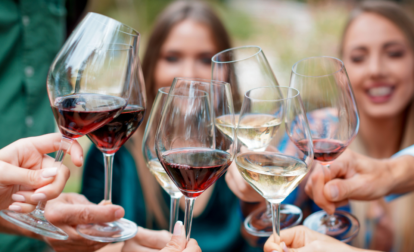
A Wine Drinker’s Guide to the Corridor

August 23rd, 2010

Written By Silas Chamberlin

Remember that weekend last fall when you and your buddies piled into the car and made an epic journey through the Corridor, consuming large quantities of only the finest beer and artery-clogging but delicious food? Well, those days are over. The girl you met at Pittston’s Coopa Cabbana became your girlfriend, and things are getting serious. Everything about her seems perfect. She is beautiful, intelligent, funny, and a die-hard Phillies fan. But, recently, your world came crashing down. A week ago, you took her to Terpstra’s Tavern in Jim Thorpe, and, playing the role of gentleman, ordered up a pair of $2 burgers and a couple pints of Stoudt’s Scarlet Lady ESB.

Terpstra's Tavern in Jim Thorpe is home of the $2 burger.

When the drinks came, she took a defiant sip of her water and stated, “Sorry, I don’t like beer. It tastes bad, and it makes you fat.” Your heart skipped a beat, not sure which hurt more—the fact that the woman you were falling in love with hates beer or the thinly veiled reference to your beer gut. “But,” she continued, “I would really love a glass of Cabernet Sauvignon to go with this burger.” A group of guys at the bar, overhearing the conversation, laughed heartily, as you tried to repeat those fancy sounding words to the waitress. “You know,” you thought to yourself, “if I am going to make this relationship work, I need to swallow my pride (and these two pints of Stoudt’s) and cultivate an appreciation for wine.” Turning to your girlfriend, you asked, “Honey, how would you like to do a wine tour of Eastern Pennsylvania?”

The Inn at Bowman's Hill is one of Bucks County's most popular Bed & Breakfasts.

You both agree to start in Bucks County to work your way north, and, after eschewing your customary pizza-flavored Combos for Vitamin Water and rice crisps, you are ready to start your tour. You make the short drive from the Inn at Bowman’s Hill, where you spent the night, to Crossing Vineyards and Winery, located less than half a mile from the Delaware Canal in the town of Washington Crossing. The grounds of this family-owned winery are breathtaking. In addition to 15-acres of vines, there are manicured lawns, fountains, flower beds, and a 200-year old stone home. You especially get a kick out of all of the winery’s green initiatives, from solar power and composting to recycling and sustainable agricultural practices. You decide to order a bottle of their Le Nouveau, a semi-dry wine culled from the early harvest, to drink on the patio. Your girlfriend points out the tannic structure; you think it “tastes…like wine.”

One of the gardens at Crossing Vineyards.

Regretfully leaving the idyllic winery grounds, you hop on scenic Route 32, which offers great views of the Delaware River, and continue north to the canal-side town of New Hope and its eponymous New Hope Winery. The winery sells bottles of its wines here, but the grapes actually come from northwestern Pennsylvania. Buy a bottle or two of their award-winning Riesling, which benefits from the cooler, lakeside climate. Try to pick out the rose petal aroma and perhaps an apricot aftertaste. You decide to stick around to listen to the local musicians who play at the winery. You’re lucky, this week the Simon and Garfunkel Tribute Band is in town!

The New Hope Winery offers tastings of their northwestern PA wines and live music.

Before hitting your next destination, you turn west for the Peddlers’ Village in Lahaska. “Uh oh,” you’re thinking. “The only thing worse than a winery tour is a winery and shopping tour.” But three million annual visitors can’t be wrong, and, after milling around the 70 shops and 6 restaurants, you have to admit that this is a pretty neat place. You’re especially fond of the Cock n’ Bull Restaurant, which serves an unforgettable baked brie with raspberry and walnut glaze. Now if only you could get “I am a Rock” out of your head…

Lahaska's Peddler's Village offers over 70 shops and 6 restaurants.

Sticking close to the river, you head north for Sand Castle Winery. This 72-acre estate, with views of the Delaware River, has been turning out bottles of Pinot Noir, Riesling, and other favorites since the mid-1980s. Amidst the vines, you’re starting to realize that half the fun of a winery tour is walking the grounds. The estate includes a light-tan stucco building with faux battlements and parapets—hence, “sand castle”—that gives the grounds a European feel. You marvel at the structure, wondering “how much it costs to insure this place?,” as your girlfriend purchases two bottles of the Private Reserve Chablis to serve at your annual clam bake.

Rows of vines lead up to the "Sand Castle."

In your attempts to duck out of conversations with overzealous tasting room winos, you’ve been reading the promotional materials at every winery, and as a budding sommelier, you recognize that as you head further north and turn west along the Lehigh River, you are entering a new viticultural area, or wine region. You had been in the Central Delaware Valley viticultural area, which spans some 96,000 acres along the Delaware River, but, as you head west on Route 22, you enter the 1.2-million acre Lehigh Valley viticultural area. With a similar climate to the Nantes region of France, Lehigh Valley wineries specialize in Chambourcin, a wine with the peppery spiciness of Shiraz, the softness of Merlot, and the aging properties of Cabernet. Or, so they say in the brochures…

Just south of Bath, Amore Vineyards great wine, fresh produce, and flowers.

As you head west past Easton, your longing eyes peer to the left, searching in vain for a glimpse of Weyerbacher Brewing’s non-descript warehouse. “Honey, keep an eye out for Route 512,” your girlfriend says, snapping you out of your hops and barley reverie and back to the task at hand. Your next stop is Amore Vineyards and Winery, just outside the small town of Bath. During a tasting, you discover that Amore vints a Cayuga that drinks like a Riesling but with a more complex floral bouquet. You are enjoying a second glass, when your girlfriend comes back inside chatting with Gregg Amore, the owner of the winery. “Gregg offers flying instruction in a 1970s era Twin Comanche,” she says excitedly. “He has an opening in two hours.” You thoughtfully remind her that the next winery is beckoning. (Besides, you’re afraid of heights.)

Clover Hill regularly offers tours of their facilities.

She takes the bait, and you are off to the west of Allentown, where both Clover Hill and Vyncrest wineries make their homes. Clover Hill is a relatively large winery, with storefront locations throughout Eastern Pennsylvania. Try their Spiced Apple wine, with hints of cinnamon and clove. It is surprisingly refreshing, even on warm summer days, and it would make a perfect choice for the crisp autumn nights that are just around the corner. Just up the road is the smaller but no less impressive Vynecrest Vineyards. Vynecrest got its start back in the heady days of 1973, when John and Jan Landis were swept up by the homesteading movement and bought five acres of farmland. The next year they had fifty vines in the soil, and, after about 15 more years, they quite generously decided to share their wines with the rest of us. You escape the heat by ducking into Vynskeller, the winery’s weekends-only wine bar, which also serves appetizers. Today they are featuring goat cheese from Stonecroft Farm in Macungie, and you sagaciously pair it with the house white.

The tasting room at Vyncrest fills up quickly on the weekends.

Next you head north for a little valley about 20 minutes west of Jim Thorpe, where Galen Glen Vineyard has made its home since 1995. The tasting room is located on a hillside and offers panoramic views of the vine-covered glen below. Before settling down at the tasting bar, you are lucky enough to run into Harry, an imposing figure who wows you with his knowledge of wine and, perhaps more importantly, food pairings. He shares his secret recipe for Spanish clams and shrimp tapas. “Pair them with our Grüner Veltliner,” Harry whispers, as if imparting sacred knowledge, “and you’ll never think of food the same way again.” Always the planner, you buy a bottle of Stone Cellar Barrel Twenty Nine, already imagining how good this port will taste sitting around the campfire on your next fishing trip.

The wine is as good as the view at Galen Glen Winery.

Swinging east to historic Jim Thorpe across an increasingly mountainous region, you drop in for dinner at Flow, a farm-to-table restaurant operated by the Carbon County Cultural Project (CCCP). Flow is located in a restored 1850s wire works factory, which also doubles as an art gallery and studio space. The local art is alright, but you are more interested in the large opening in the floor that provides a view of a gushing stream, running directly beneath the buildings. You settle in at a table near the stream, order up some whole wheat potato gnocchi, and settle on a bottle of Rose Eye, one of three wines produced under the CCCP label. “Ahhh,” you muse, “I could get used to this wine thing.”

CCCP's Flow Restaurant is housed in a nineteenth-century wire factory.

Making your way down the hill into downtown historic Jim Thorpe, you see a sign for Big Creek Vineyard. You slow down and stare into the rearview mirror, seeking—amidst the crates of wine and luggage—room for just one last bottle. “What the hell,” you say to your girlfriend, “you have space in the front seat, right?” Big Creek’s vines are actually located in Kresgeville, just east of Beltzville State Park, but they maintain a store front in Jim Thorpe to lure people like you into buying a couple of bottles on their way through town. After conversing with the staff, you settle on two extremes: the port-like Frontenac, which you enjoyed once in its homeland of Minnesota but haven’t seen since, and the Apple Raspberry fruit wine, which should go well with that block of blue cheese in the cooler.

Big Creek Vineyards has a storefront location in Historic Jim Thorpe.

Back in the car, you consult the map. “Well, it looks like we are just about back to the place where this all started,” you remark regretfully, not wanting your wine and food fueled journey to end. “You know,” your girlfriend hesitantly responds, “Scranton is not far from here…” You searched her face, trying to figure out what she meant. It had only been six months since you last toured the Anthracite Heritage Museum, so that couldn’t be it. Like any good Phillies fan, you can’t stomach New York teams, so no Scranton/Wilkes-Barre Yankees game. The Steamtown Mall? The Houdini Museum? Sno Cove Water Park? “Hmm. I’m not really sure what you mean…,” you begin to admit but stop in mid sentence, recognition washing over you: “You want to go to Carmen’s!!??”

Carmen's is located within the recently restored Lackawanna Station.

Carmen’s Restaurant & Wine Bar, located in the grand lobby of the Radisson Lackawanna Station Hotel, is a diamond in the culinary rough of northeastern PA. Financially drained from your adventure, you settle for a bread plate with hummus and tapenade and, feeling courageous, an ahi tuna sushi pizza. With little thought, you select a 2007 Erath Pinot Noir to pair with the hummus and the sushi—a move that gets an approving nod from the impressed waiter. Sitting back in your plush seat, you admire the beaux arts structure with its vaulted, Tiffany-glass ceiling—a testament to the booster optimism of fin de siècle Scranton. This is even nicer than Weissport’s Boat Yard Bar, you think to yourself. Finishing your meal and pouring two more glasses of wine, you and your partner take to the dance floor…

The dining room at Carmen's, located in the Grand Lobby of the Lackawanna Station.

As the sun sets on another beautiful Pennsylvania day, you find yourself sitting on a bench outside the Coopa’ Cabana, the tiki bar that brought you and your girlfriend together for the first time. Attempting to impress her with your newfound appreciation for and knowledge of wine, you pull out a bottle of Bartolai’s Callabritto, made just down the river in Harding. “It is a unique dry blend, amore mio, with a sophisticated fruit taste,” you announce, in your best faux-Italian accent. She, laughs, and pulls out her own surprise—a bottle of Victory’s Yakima Twilight. “It has the tenacious grip of big, juicy hop aroma and character that slides smoothly into rich, dark malts,” she recites from the bottle. You look at her with loving eyes, as the sun dips below the horizon, “I think this is the beginning of a beautiful relationship.”

You must be 21 years old to consume alcoholic beverages.  Always drink responsibly.